Textiles, as indispensable materials in daily life, play a significant role in various fields such as product quality control, consumer rights protection, and cultural relic identification. With the continuous increase in the variety of textile materials and the emergence of new fiber materials, traditional identification methods are gradually struggling to meet the demands in terms of efficiency and accuracy. This study aims to explore the application value and feasibility of Raman spectroscopy technology in the identification of textile fibers.
Textile materials are primarily divided into two major categories:
Natural fibers: including cotton, wool, silk, etc.
Chemical fibers: including synthetic fibers such as polyester and nylon
Traditional fiber identification methods mainly include:
| Method | Principle | Limitations |
| Microscopic observation method | Observing fiber morphological characteristics | Time-consuming, requires high experience from the operator |
| Melting point testing method | Testing Fiber Melting Point Characteristics | It belongs to destructive testing, with lower efficiency |
| Chemical Dissolution Method | Utilizing the solubility differences of different solvents | May damage samples, operation is complex |
Common problems of the above methods include long detection cycles, high requirements for operation technology, and some methods being destructive detection, etc.
Basic Principle of Raman Spectroscopy
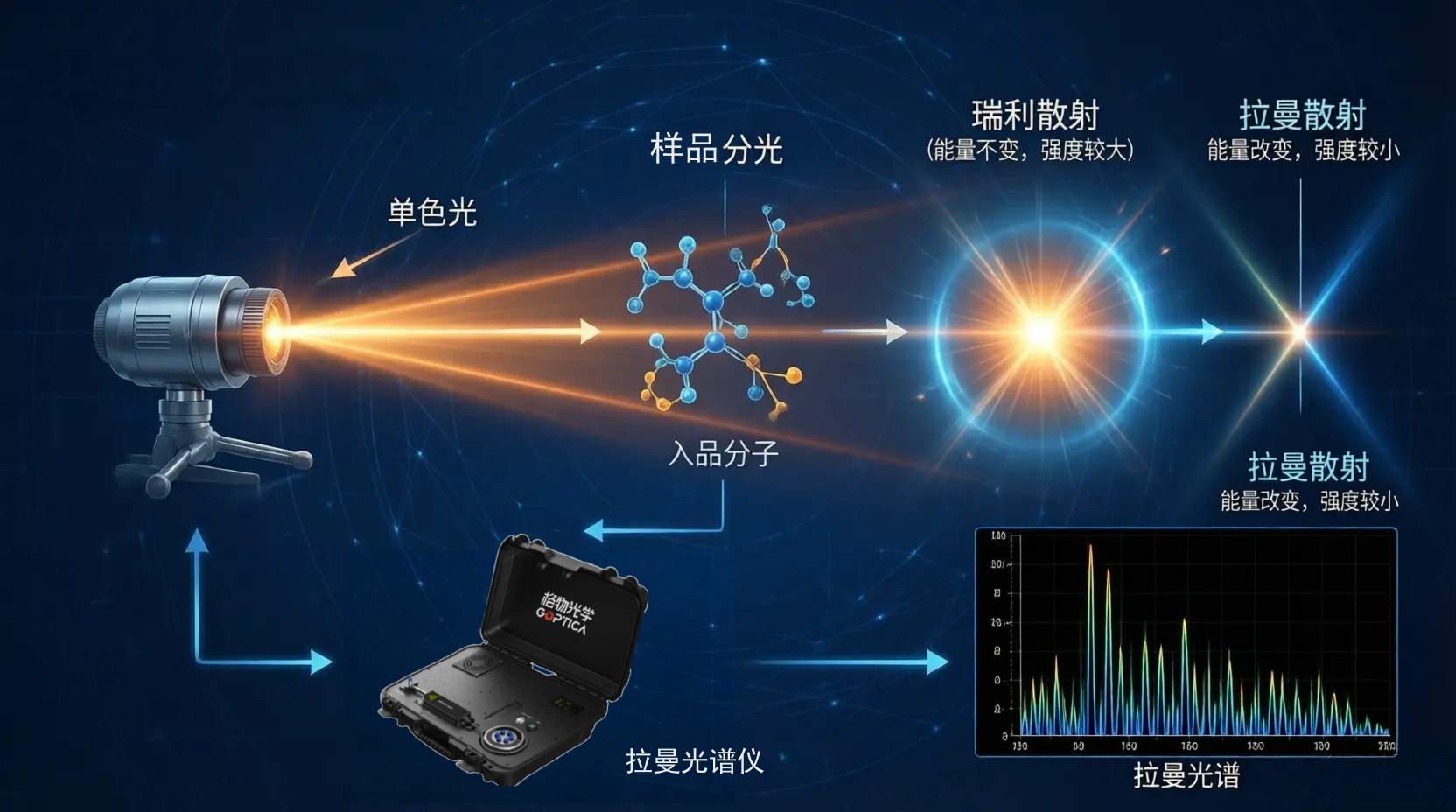
Raman spectroscopy is an analytical technique based on the Raman scattering effect. When light interacts with molecules of a substance, some photons undergo inelastic scattering, resulting in energy changes, thereby reflecting molecular vibration information.
| Technical Advantages |
| Schematic Diagram of Detection Principle |
Non-destructive: Samples remain intact after testing Fast and Efficient: The detection process is usually completed within minutes High specificity: Different materials have unique spectral fingerprint characteristics No sample pretreatment required: Can directly detect solid samples
|
| 
|
Identification of natural and synthetic fibers
| Through Raman spectroscopy detection, natural fibers (such as cotton) and synthetic fibers show significant differences in spectral characteristics. The main differences are reflected in specific Raman shift bands, where different materials have their own unique characteristic peak positions. | 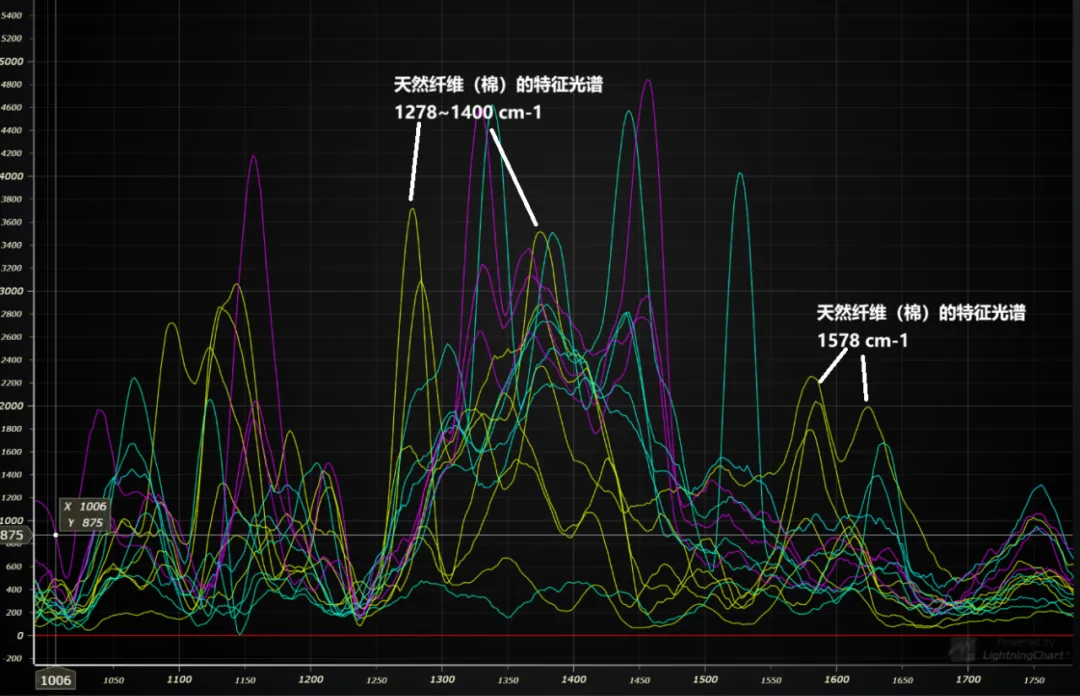 |
Distinguishing Different Synthetic Fibers
Various synthetic fibers exhibit characteristic peak distributions in Raman spectra: Polyester fibers show characteristic peaks in specific wavenumber ranges Polyamide fibers show characteristic peaks in another wavenumber range Other synthetic fibers also have their own unique spectral fingerprints
| 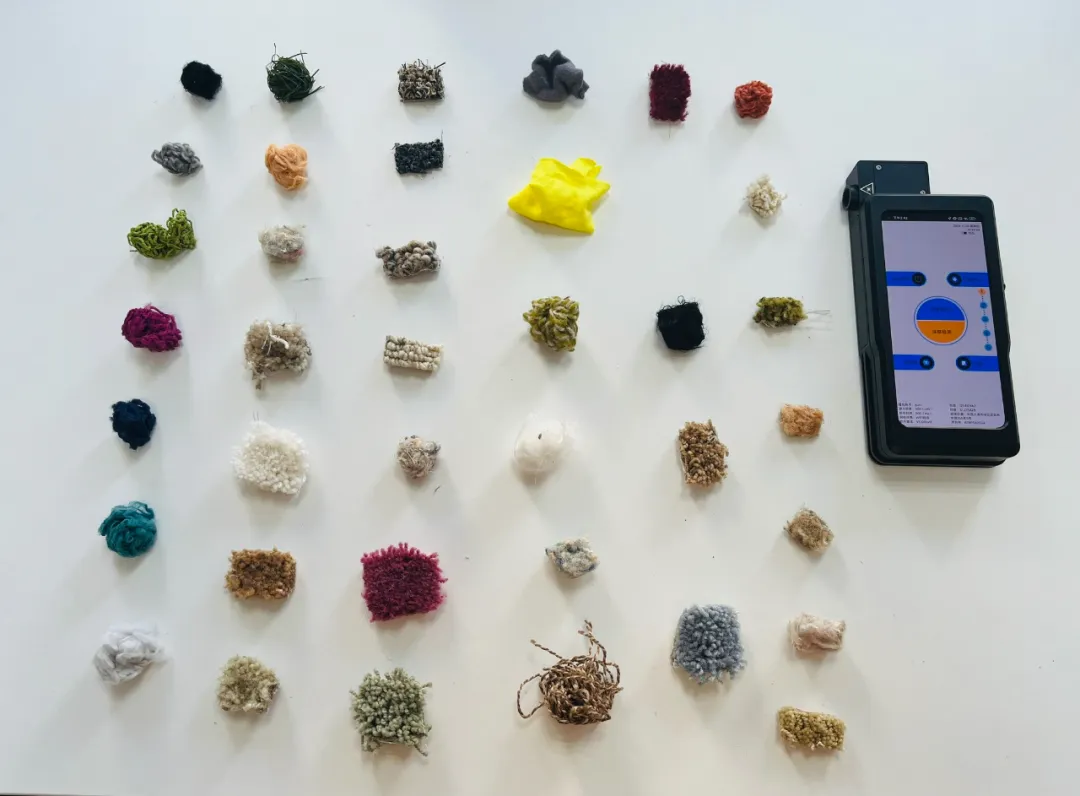 |
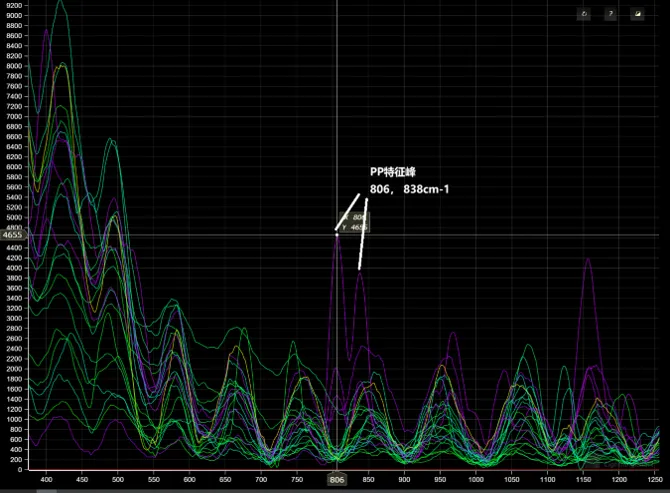
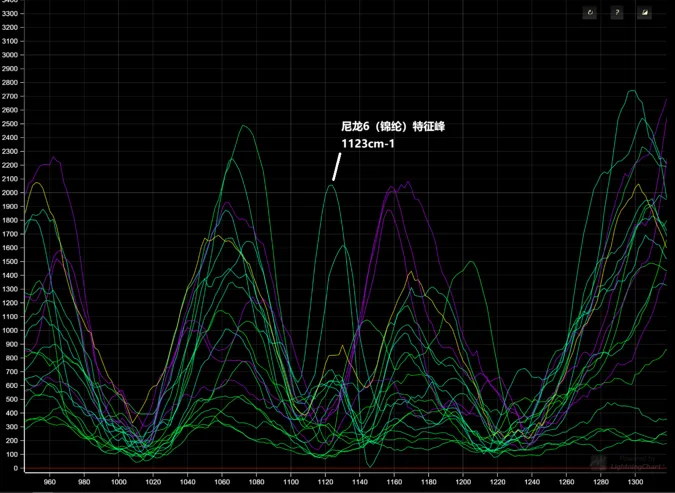
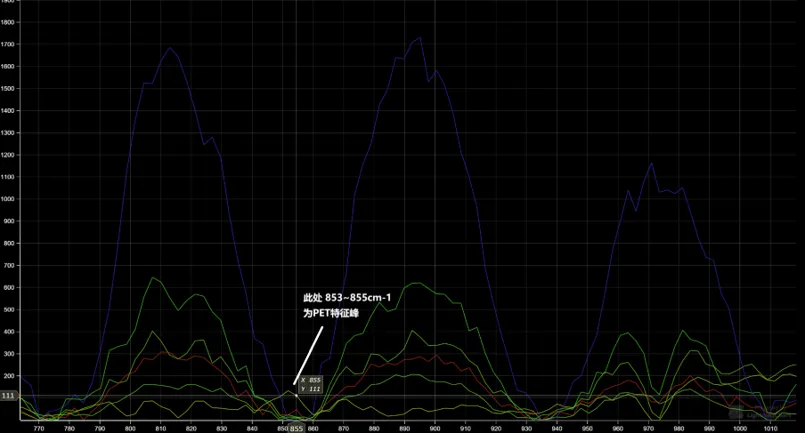
Chemical fiber materials are substances processed into fiber form through chemical or physical methods using natural or synthetic polymer materials, including nylon, polyester, polypropylene, etc. Based on the unique characteristic peaks of different chemical fiber materials in Raman spectra, they can be rapidly and accurately identified. For example, polypropylene has characteristic peaks at 806 cm -1 and 838 cm -1 ; nylon shows distinct characteristic peaks at 1123 cm -1 ; while polyester has characteristic peaks at 853 cm -1 .
|
|
| 
|
| 
|
| Discriminate polypropylene based on the characteristic peaks at 806 cm -1 and 838 cm-1 |
| Discriminate nylon based on the 1123 cm -1 characteristic peak |
| Discriminate polyester based on the 853 cm -1 characteristic peak |
Analysis of component materials in blended fabrics
For blended fabrics composed of multiple fibers, Raman spectroscopy technology can effectively identify all fiber types contained within, and can roughly assess the proportion of each component material through spectral intensity analysis.
Based on the built-in mixture identification algorithm of the BLADE-785B-PRO Textile Inspection Special Edition, common blended materials such as clothing can be quickly identified, and their component types and proportions can be accurately determined . Specifically, the algorithm analyzes the characteristics of various fibers in the clothing, combined with the high-precision data of Raman spectroscopy technology, to conduct a comprehensive component identification of textiles.
Technical Applicability
Raman spectroscopy technology demonstrates the following application advantages in textile fiber identification:
Suitable for precise detection in laboratory environments
Suitable for non-destructive detection scenarios such as valuable cultural relics and artworks
Can be used as an auxiliary detection method for production quality control
Future consideration could be given to combining Raman spectroscopy with other analytical techniques (such as infrared spectroscopy, X-ray diffraction, etc.) to improve the accuracy of identifying complex textile materials.
Summary: Raman spectroscopy technology has significant application value in the identification of textile fibers. This technology can:
Quickly and accurately identify fiber material types
Distinguish between natural and synthetic fibers
Multi-component analysis of blended fabrics
With the widespread use of detection equipment and the improvement of data analysis methods, this technology is expected to play a more important role in fields such as textile quality control, consumer rights protection, and cultural relic preservation.