【Cutting Edge of Technology】Traditional detection methods are facing limitations. Lossless rapid detection technology opens a new era for the industry
Industry challenges: With the continuous emergence of new materials, traditional methods for identifying their properties become increasingly inadequate
Textiles have become integral parts of our daily lives—from everyday clothing to household items. There is a growing variety of fibers available, ranging from natural cotton, linen, and silk to various chemical fibers and blended materials. In recent years, the emergence of new materials such as special fibers, composite fibers, and modified fibers has not only posed new challenges for optimizing production processes and improving product quality, but also made the identification of textile components an essential aspect of protecting the rights and interests of consumers.
However, traditional methods such as microscopic observation and melting point analysis have been used for many years. However, these methods generally have several drawbacks: they require a long time to perform, have insufficient resolution, and are susceptible to environmental interference. As a result, they cannot meet the urgent needs of the modern textile industry for efficient and accurate detection.
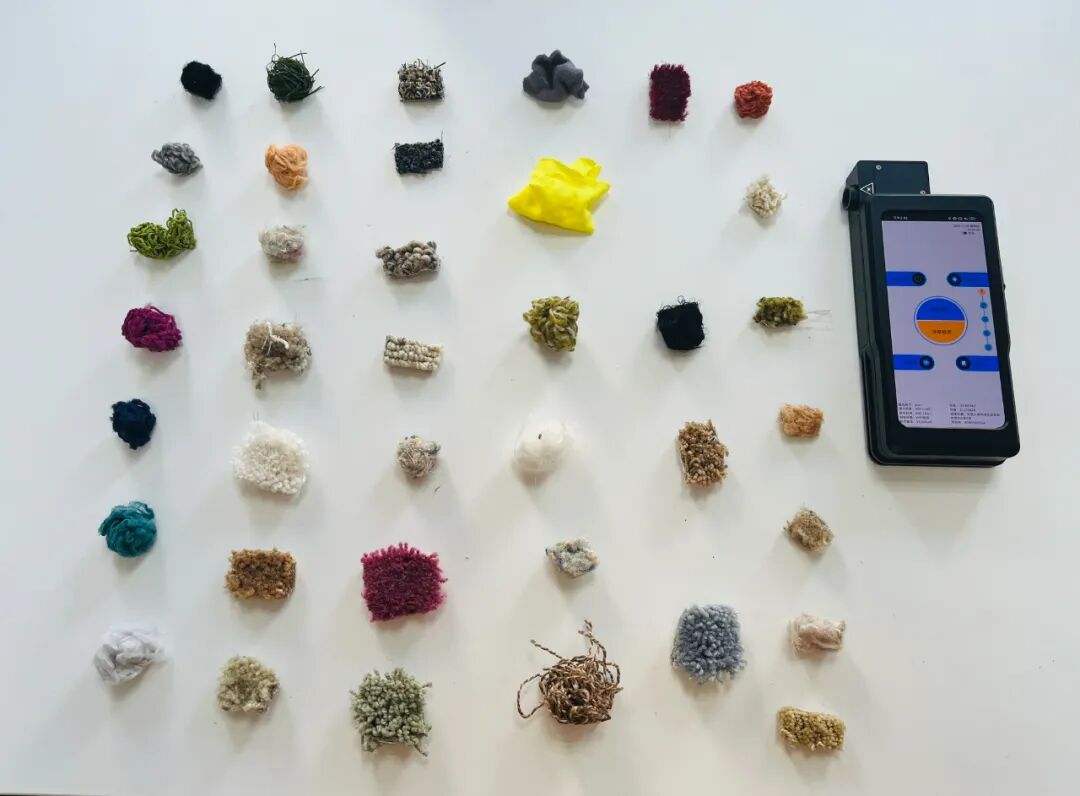
Technological breakthrough: Raman spectroscopy provides fibers with a “molecular identity card”
The emergence of Raman spectroscopy technology has brought revolutionary solutions for the identification of textiles. This technology allows for the precise identification of molecular structure characteristics by detecting the frequency of molecular vibrations. As a result, each type of fiber can be assigned a unique “molecular fingerprint”.
Compared to traditional methods, Raman spectroscopy technology offers three key advantages:
· Rapid identification: capable of distinguishing natural fibers (cotton, wool) from synthetic fibers (polyester, nylon, etc.) in just seconds.
· Mixed fiber analysis: accurately identifying the types and proportions of mixed fiber materials such as polyester and cotton
· Non-destructive testing: No need to damage the samples. Ideal for analyzing valuable textiles and cultural relics.
Product launch: RMT 785 brings a new era of intelligent detection to the world
To meet the specific requirements of textile testing, Goptica's RMT 785 textile testing version was developed specifically for this purpose. This device features two key advantages:
1. DeepSpec: An intelligent recognition algorithm for identifying mixtures.
DeepSpec algorithm developed by Goptica enables rapid qualitative analysis of textile materials with various weaving methods and colors. It can accurately determine the composition and approximate proportions of various components in blended materials, significantly improving the efficiency and accuracy of testing.
2. Special sampling accessories for textiles
The uniquely designed large-area sampling attachments effectively prevent distortion in results due to local samples burning out from heat. This significantly improves the reliability and reproducibility of the testing process.
Practical validation: Three cases demonstrate the company's strong technical capabilities
Case 1: Natural fibers vs synthetic fibers – A clear distinction at a glance
In Raman spectroscopy, natural fibers such as cotton exhibit distinct spectral features, which are clearly distinguishable from synthetic fibers. Specifically, at wavelengths between 1278~1400 cm⁻¹ and 1578 cm⁻¹, the characteristic peaks of natural fibers are due to the molecular vibrations of cellulose or proteins. In contrast, synthetic fibers produce signals that are characteristic of synthetic polymers. The difference between natural and synthetic fibers is quite clear and can be easily distinguished.
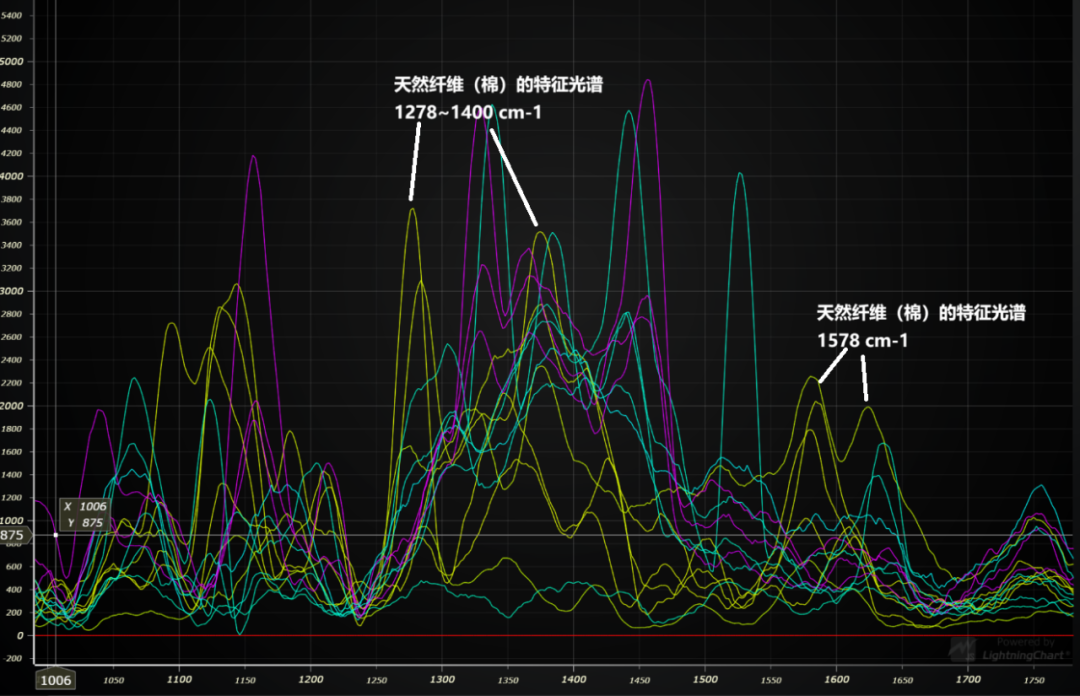
Figure: Raman-based spectral screening of natural fibers
Case 2: Various synthetic fibers demonstrate their unique properties – precise positioning is essential
Different chemical fiber materials have their own "unique signatures" in Raman spectroscopy:
· Polyester: Characteristic peaks are observed at 806 cm⁻¹ and 838 cm⁻¹
· Nylon: A distinct peak is observed at 1123 cm⁻¹
· Polyester: exhibits unique signals at a concentration of 853 cm⁻¹
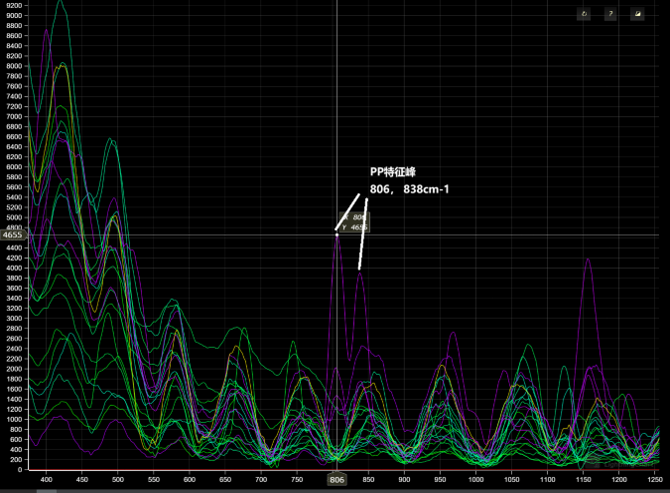
Figure shows the identification of polypropylene based on characteristic peaks at 806 cm -1 and 838 cm -1
Based on these “molecular fingerprints”, various synthetic fiber materials can be quickly and accurately identified.
Case 3: Mixed-fiber clothing with “transparent ingredients” – The proportions are clearly visible
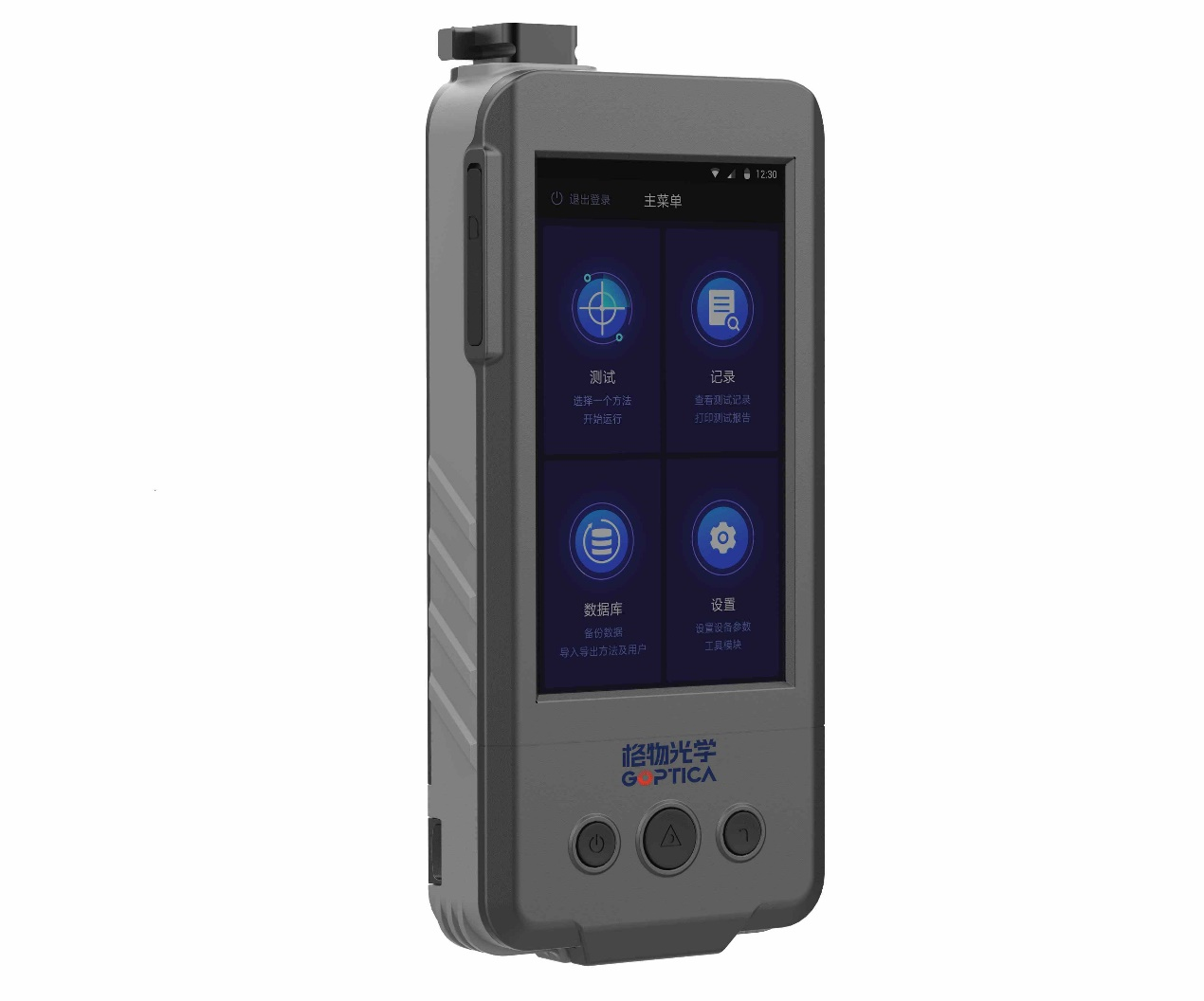
With the help of the integrated mixture identification algorithm in the Goptica's RMT 785B, it is possible to accurately detect mixed-fiber materials such as common clothing. This technology allows for rapid identification of various fiber components, as well as precise determination of their proportions. In other words, it represents a comprehensive upgrade from qualitative to quantitative analysis.
Future prospects: From quality control to cultural heritage protection, the boundaries of application continue to expand
The test results indicate that Raman spectroscopy technology not only can accurately distinguish between natural fibers and synthetic fibers at a qualitative level, but also enables a deep analysis of the composition and proportions of blended fibers. This demonstrates its great potential in the field of textile identification.
With the continuous optimization of detection algorithms and the continuous improvement of device performance, Raman spectroscopy technology is expected to play a more significant and far-reaching role in fields such as textile quality control, new material research, and cultural heritage preservation. This will help to drive the entire industry towards greater intelligence and precision.
Product link:
Handheld Raman spectrometer (785/1064 nm)| Goptica, specializing in optical analysis (goptica.com)